Tag: AI in education
-

The Translation Layer
A field note on AI as a translation layer for vocational education, micro-credentials, learner records and capability infrastructure in New Zealand.
-
Stop Diagnosing. Start Understanding.
A field note on why adult education needs a shift from diagnosing learner deficits to strengthening professional judgement, observation and understanding.
-

AI, Assessment, and the Growing Capability Trust Problem
Generative AI didn’t suddenly break assessment systems. It exposed fragile assumptions around evidence, authorship, and capability trust already present in tertiary education.
-

Recursive Pedagogy: Learning in the Age of Reflective AI
Most debates about AI in education focus on cheating, productivity, or academic integrity. But a deeper shift is emerging beneath the surface: AI is beginning to function as a reflective cognitive mirror inside the learning process itself. This essay explores Recursive Pedagogy — a model of learning built around reflection, dialogue, metacognition, and iterative refinement…
-

When Scale Changes Teaching Work
At scale, small inefficiencies become structural. AI can reduce friction—but judgement remains central to teaching.
-
A Way In: AI Tertiary Education Aotearoa
AI has already entered tertiary education. The tools are accessible, but the entry point isn’t obvious. This post introduces a set of learning collections developed through AI for Good (Ako AI Tertiary) as a grounded way in — shaped by values, not added to them.
-

Micro-credentials are easy to start. Hard to get right.
Micro-credentials promise agility — but most are harder to design, approve, and use than people expect. Here’s what actually matters.
-

The Capability Gap: Why AI Adoption Isn’t the Same as AI Readiness in Education
AI adoption has moved faster than human capability. The result isn’t failure — it’s instability. The real work now is building professional judgment, literacy, and confidence so governance can take shape.
-

After the Reaction Phase: AI Governance in Education
The AI reaction phase is over. The real work is no AI governance in education, judgment, and professional capability — not panic, hype, or policy alone.
-
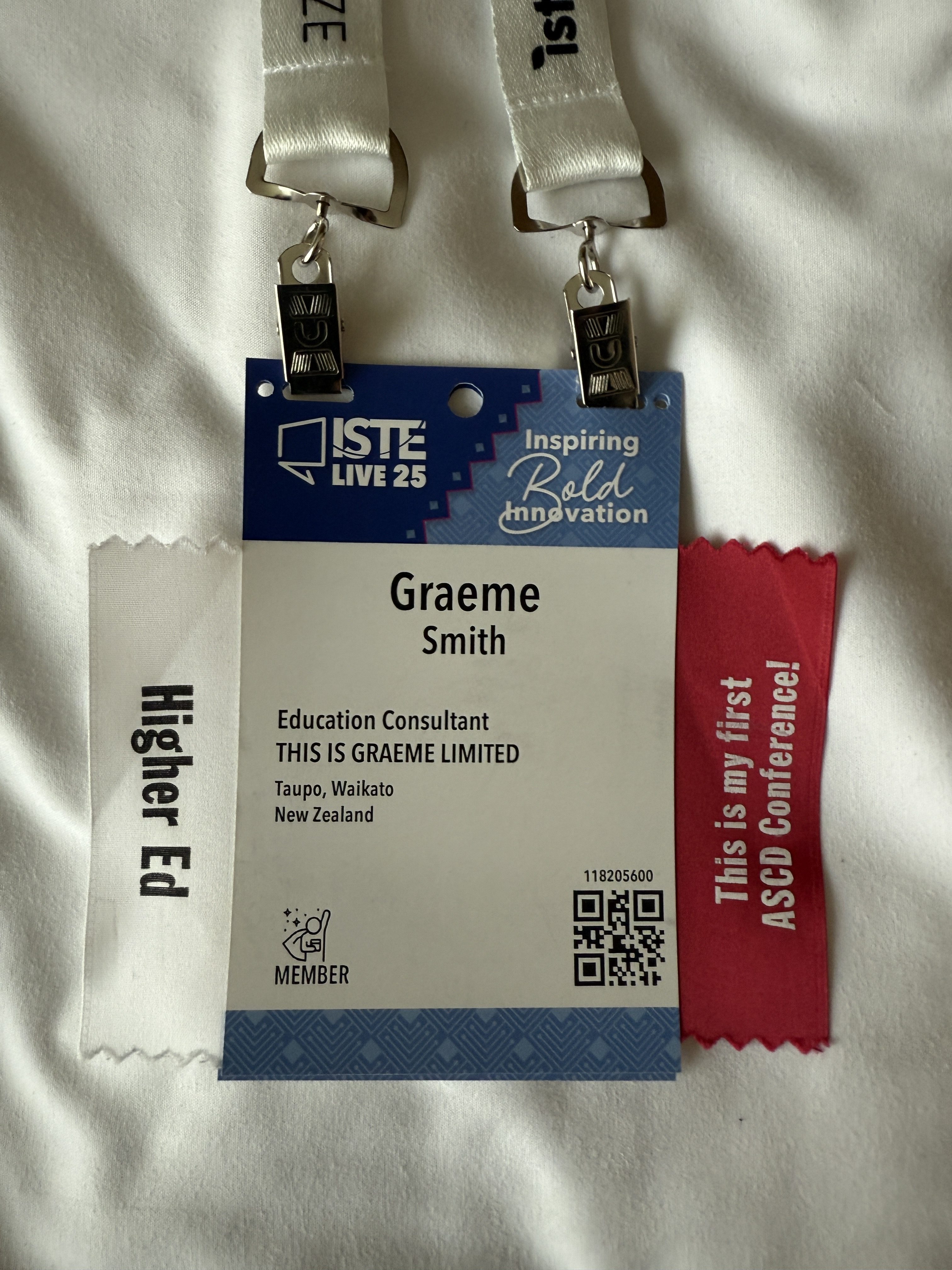
ISTE 2025 San Antonio: Part III — The Return and What the Trip Set in Motion
Returning from ISTE 2025 San Antonio clarified the real work ahead — building systems and capabilities for learning in an AI-shaped world.