There’s a common assumption in education that better learning comes from getting learners to think harder.
I’m no longer convinced that’s the right question.
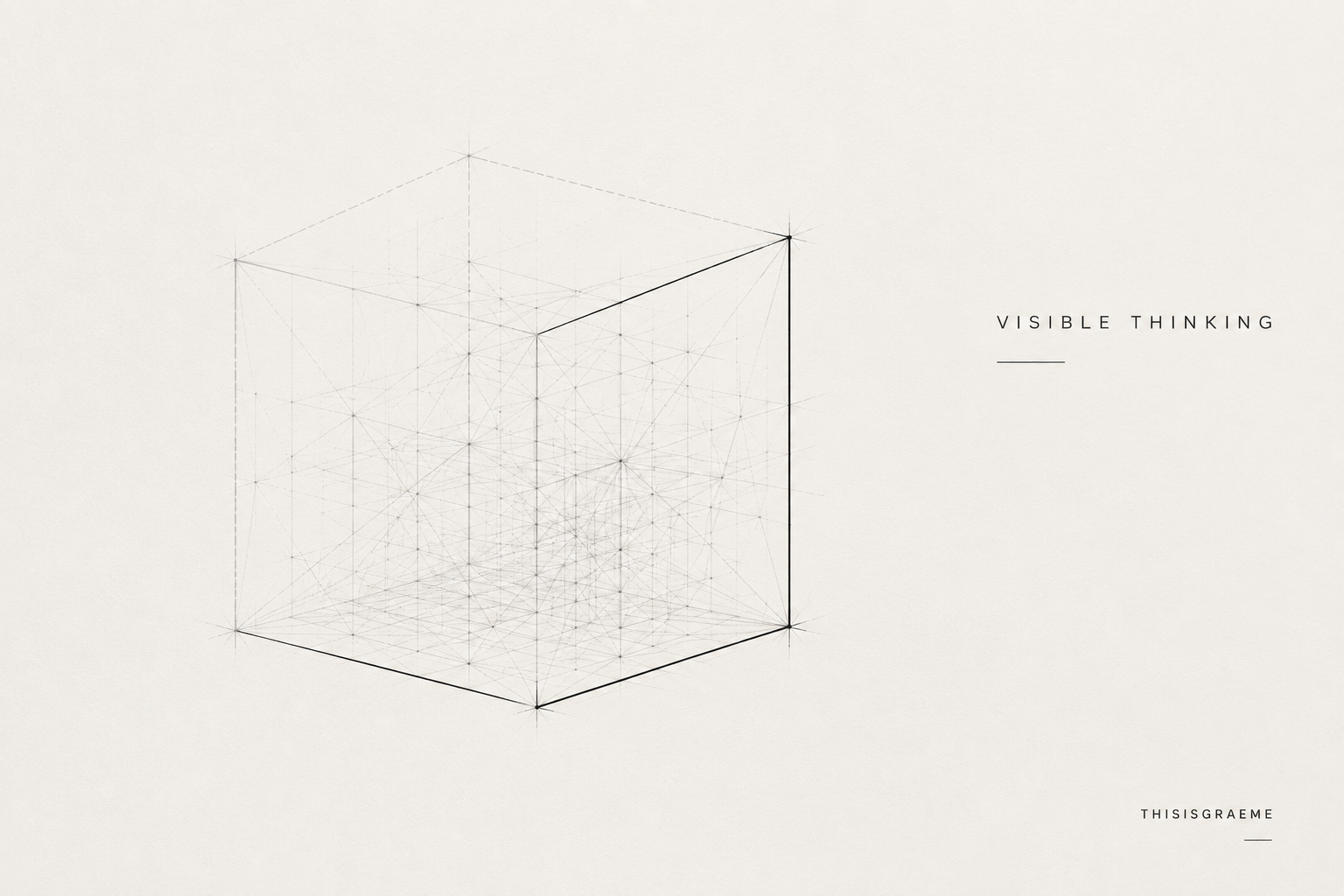
The challenge isn’t that thinking is absent. It’s that most thinking is invisible.
A learner can appear disengaged while making connections internally. Another can look busy while simply repeating information they’ve memorised. From the outside, they can look remarkably similar.
The role of a tutor isn’t to guess what’s happening inside someone’s head.
It’s to create conditions where thinking becomes visible.
That might be as simple as asking:
- What are you noticing?
- What makes you think that?
- What changed your mind?
- What would someone else see differently?
The answers matter less than the process they reveal.
Once thinking becomes visible, something changes. Tutors can respond to reasoning instead of behaviour. Peers can build on each other’s ideas. Learners become more aware of how they are making sense of the world, not just what they know.
In an age where AI can produce polished answers in seconds, this feels more important than ever.
The value is shifting away from generating content and towards making judgement visible.
Perhaps that’s the real role of education now.
Not simply transferring knowledge.
Helping people make their thinking observable, examinable, and improvable.
Kia ora! Hey, I’d love to know what you think.