Notes from re-entry
I didn’t come back from this trip with ideas.
I came back with a recalibrated sense of time.
Not what’s coming, but what is already quietly, decisively, in motion. The kind of shift that doesn’t announce itself as “the future” anymore because it’s too busy doing the work of the present.
This wasn’t a return in the usual sense. It was a re-entry.
Re-entry, not return
San Antonio, San Francisco, meetings, conferences, conversations — those are the surface facts. But the real movement happened underneath.
At some point on the trip, I stopped asking what’s next and started noticing what no longer required explanation. That’s usually the tell. When systems stop selling themselves and simply operate, something has crossed a threshold.
The clearest moment of that came unexpectedly early.
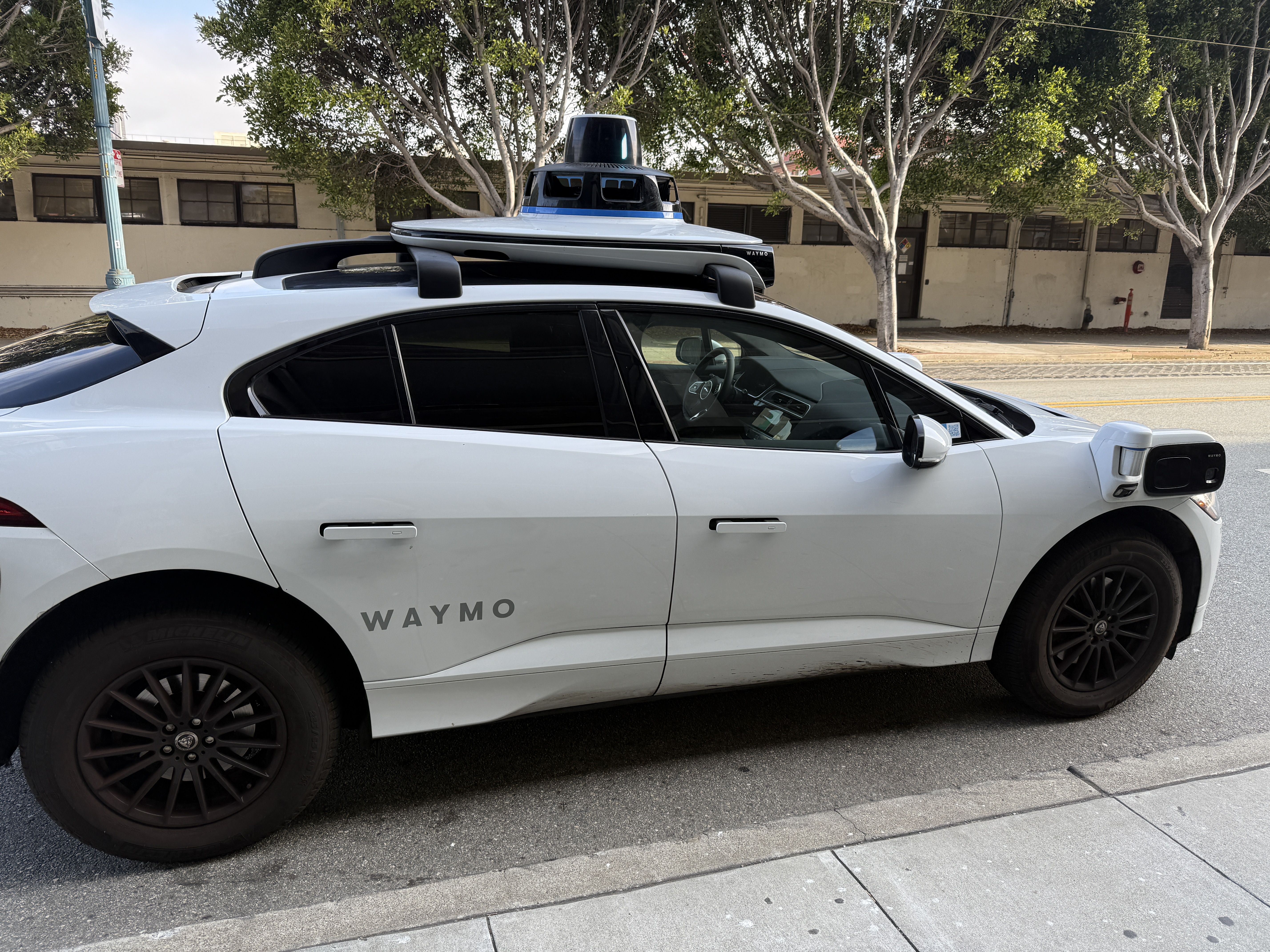
Waymo: the moment the body believes
I got into a car with no driver.
No fanfare. No demo mode. No apology. Just a vehicle, waiting at the kerb, doors unlocking when they were supposed to, moving when they should, stopping when they must.
The thing that surprised me wasn’t the technology. It was how quickly my body stopped negotiating with it.
There was no dramatic trust exercise. No cinematic sense of risk. Within minutes, the absence of a driver faded into the background and what remained was something far more unsettling: normality.
This wasn’t a prototype. It wasn’t an experiment. It wasn’t “the future”.
It was logistics.
That’s the moment the argument ends — when the body accepts what the mind is still catching up to.

San Francisco: when the signal is normalised
San Francisco didn’t feel futuristic.
That’s the point.
The signal density is high, but it’s quiet. Autonomous vehicles, AI-mediated workflows, invisible systems coordinating movement, labour, attention — none of it announces itself. It just hums along as infrastructure.
What feels disruptive from the outside has already been metabolised on the inside. The future doesn’t look like a keynote here; it looks like a weekday.
This is the detail that often gets missed in policy conversations back home. The real shift isn’t innovation — it’s saturation. The moment when something stops being impressive and starts being assumed.
That’s a very different phase of change.
Google: institutional gravity
The Google visit didn’t feel secretive or impressive in the way people imagine.
It felt settled.
This wasn’t a place inventing the future in real time; it was a place stabilising it. Processes, norms, confidence. The quiet assurance of organisations that aren’t asking if something will scale, only how cleanly.
That distinction matters.
There’s a difference between disruption and gravity. Disruption excites. Gravity endures. What I saw here was gravity — systems that have already adjusted their posture to a world where AI isn’t novel, controversial, or optional.
It’s just part of the operating environment.

What can no longer be unseen
Coming home after that kind of exposure does something subtle but permanent.
Certain conversations now feel misaligned. Certain timelines feel artificial. Certain debates feel like they’re happening in the wrong tense.
When systems are already operational elsewhere, pretending they’re hypothetical becomes a form of avoidance. Polite, well-intentioned avoidance — but avoidance nonetheless.
I didn’t come back wanting to persuade anyone of anything.
I came back knowing, with unusual clarity, what can no longer be unseen.
And once that line is crossed, the work ahead isn’t about prediction or advocacy. It’s about orientation — deciding how to stand, build, and move when the future is no longer approaching, but already passing quietly through the room.
That’s where 2026 begins for me.
Kia ora! Hey, I'd love to know what you think.